I have trouble justifying my typical 2-4 cups of coffee a week. No matter how diluted with rice milk, whether regular or decaf, there is no denying the less-than-ideal effect of the acids on my tummeh.
However, my average 36 oz of coffee a week has other benefits.
First of all, it magically suppresses nausea. Secondly, it helps me to stave off hepatic cancer and chronic liver disease (Johnson et al 2011*). And as anyone who has ever taken steroids or 6MP or been on chemo/biologic therapy knows, this is a handy dandy organ. Specifically, Dr. Johnson and colleagues report that of their coffee-drinking cohort participants, those who drank 3+ cups of coffee per day on average had a 44% reduced risk of develpping hepatocellular carcinoma compared to those who never drank coffee. As clinical studies go, 44% is a pretty big deal.
There are other reasons to drink coffee, such as its recent implication in protecting against prostate cancer, and the age-old [read: 6-year old] claim that coffee can protect lymphocytes from toxin-induced DNA damage (Steinkellner et al 2005; Bichler et al 2007). Suffice to say, there is ample support for moderate coffee consumption.
Folks, I needed an excuse to get my French roast fix. Or Brazillian roast, or fair trade Guatemalan... really, it's whatever is being served at Journal Club.
*Johnson S, Koh WP, Wang R, Govindarajan S, Yu MC, & Yuan JM (2011). Coffee consumption and reduced risk of hepatocellular carcinoma: findings from the Singapore Chinese Health Study. Cancer causes & control : CCC, 22 (3), 503-10 PMID: 21258859
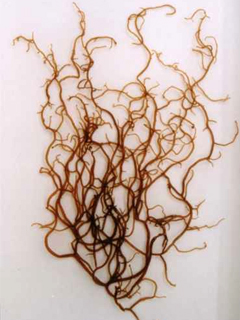
It may or may not be apparent to most of my readers that it has been quite some time since I've blogged on a Food of the Day. The reason is that, well, there are only so many foods a Crohn can eat [read: admit to eating]. Since I'm diving most enthusiastically into this fiber fest, it is time to give some hard-won and well deserved attention to seaweed.
Seaweed, to me, has always seemed a benign and healthy food for two reasons: 1) it is an algae, and algae is generally purported to have excellent mineral benefits, and 2) because seaweed makes Sushi more chopstick-friendly -- nigiri is very complicated because it is a 2-3 bite endeavor, andsashimi is too expensive to eat as often as I eat sushi.
I was, therefore, thrilled to learn that types of seaweed have direct benefits in both in vitro and in vivo models of IBD. Fucoidan (brown seaweed extract), specifically the Cladosiphon okamuranus Tokida kind (collegially, Mozuka), has been shown to protect against the development of intestinal tumors in rats (Yamamoto and Maruyama 1985). Even more exciting was that Mozuka inhibited interleukin-6 (IL-6) activity and down-regulated NF-κB in a model of colitis (Matsumoto et al 2004). IL-6 and NF-κB are two of the primary triggers of intestinal inflammation.
Yet another study suggests that Mozuka inhibits the adhesion of Helicobacter pylori to an in vitro human gastric cell line (Shibata et al 1999). Reports on the effects of Mozuka against H. pylori are, in fact, numerous: Shibata et al 2003, 2000; Nagaoka et al 2000).
Nori saeaweed is rich in minerals such as calcium, zinc and iron (Shaw and Liu 2000) which are typically lacking in Crohns or persons with any digestive dysfunction. Shaw and Liu also suggest that Nori helps the intestine to absorb minerals from other sources such as the Crohn-coveted magnesium. It is also an excellent source of soluble fiber.
There are many other benefits of various seaweeds, but as you can see, this post is already quite orange. I will continue to ingest my moderate portions of sushi, roasted nori and Wakame (in soups = nom!) without fear.
One of my most favorite wedding gifts was from Lovely Lisa. Leave it to the Waffle Wizard to bestow upon me a waffle maker of my very own.
Not only does my fancy new culinary instrument occupy perfectly that-one-shelf-space-in-the-kitchen-into-which-nothing-else-fits; there is just no topping the ultimate design of the waffle in terms of entree base.
Last night, I conducted my first experiment: waffled polenta. It was simple, speedy and surprisingly delicious -- delicious in a reliable way, as if I could make this thing well more than one fluke time in my life.
Next up, "Fawafles".
yes, this is, indeed, Tapatio sauce.
Protest all you like about how terrible corn is for the Crohn tract. While cornbread, polenta, grits, hominy and cornmeal soup are all reproved in the common Crohn's or IBS diet, these are also gluten free foods, so if your reactions tend to be more volatile with wheats, polenta can be a benign substitute. Cornmeal is also higher in fiber than wheat, and can be very helpful with Obdurate Throughput. With Crohn's the clinical studies never cease to reveal that what is beneficial to one case is likely to be harmful to another, and there is no universally harmful food in Crohn's disease (Triggs et al 2010).
Tomatoes are quite acidic, no matter how you cook them. I have an unhealthy propensity for acidic foods (tomatoes, vinegarettes, wine...) lately -- particularly since socializing and celebrating have reclaimed significance in my life. This is a terrible weakness.
I decided two nights ago that since tomatillos are green, and I've always wanted to consume green tomato (of any variety), and Kathryn posted this delightful recipe (which I made without cream), I decided to make tomatillo sauce and (soy) cheese enchiladas...
They were beautiful, and tasty, and my guts mobilized an insurmountable army during the night and destroyed me the following day. Perhaps this is a sign that I should tone down the acid.
I wrote a post several weeks ago defending onion soup: this, in reality, was a legitimate case. Tomatoes, however, are different. I may venture to use Paste tomatoes which are infamously lower in acidity than other tomatoes -- red, pink, yellow -- which all range in the vicinity of 4.6 pH (1).
I may also attempt to overripen my next batch of tomatoes before consuming, as acidity also decreases -- aka, pH increases -- with overripening and bruising (1).
Tomato juices are also lower in acid than tomato solids, go figure, so some tomato juice soup may be high on the experimentation docket (1).
Or, of course, there's also cooking tomatoes with other vegetables to quell the acid.
Or not eating them so often.
What I did learn about tomatillos, in particular, though, is that they are unusually high in lithium and are recommended to eat when moody or manic (2). Interesting, no?
In honor of Lindsey's comment and Kathryn's latest recipe recommendation, today's Food of the Day is the mushroom!
Mushroom's are pretty Me Friendly because my particular brand of Crohn's is not usually obstruction. The only reason anyone ever tells you to avoid mushrooms is because of the high fiber content, but in that regard they are friendlier than many leafy vegetables, and so, grief-stricken by the absence of kale and Brussels sprouts from my diet, I console myself with mushroomy magic.
One of the least known traits of mushrooms is that they are rich in vitamin D, whose important role in preventing/ameliorating Crohn's has been discussed on many venues of late (specifically in reference to a Canadian study just released in J Biol Chem, and aFrench theory published in Medical Hypotheses).
Shitake extract has been patented as protective in inflammatory bowel diseases (both Colitis and Crohn's). It has been known that mushroom extracts generally have an immunomodulatory effect, activating cytokines (including TNF-alpha). The Shuvy group demonstrated in 2008 that the Shitake extract Lentinan increased concentrations of TNF-alpha in the spleen and liver of mouse models of Colitis. They also showed that this increase was correlated with improvement in Colitis severity (as measured by mini-resections and immunohistochemistry, which is an impressive measure that many studies of digestion in IBDs lack, but I digress...). Like many other treatment therapies for IBDs, Lentinan was previously shown to be effective against tumors (Kidd 2000). As a member of the Crohn's club but not the Colitis coterie, I would have preferred that Shuvy et al also looked at TNF-alpha levels in the intestine; alas, some other time and place.
But, of course, medicating by patented herbal supplement is quite different than through diet. You will not see the grandiose effects of Shitake extract from just eating mushrooms a few times a week. In the long term, however, exposing your intestines to the B-glucan in Shitake mushrooms may prove equally beneficial. This is why we need longitudinal nutritional studies that augment experiments on petri dish cell colonies.
And with that, we ascend from the mouse studies of Colitis, and move up to the clinical studies specifically on Crohn's in humans.
A large study by Petermann et al suggested that more people in NZ report intolerance to mushrooms (and corn) than beneficial effects. Among those people reporting adverse effects from mushrooms, there was a higher frequency of the gene OCTN1 than in the general OR mushroom-friendly Crohn's public, suggesting that the gene had more to do with the mushroom adversity than did the Crohn's.
The occurrence of the OCTN1 gene variant among the Crohn's population is not consistent between European and NZ studies, and has yet to be performed in the United States. I do not find this surprising as even between individual Crohnies of the same community there are variations in food tolerance: the same diet than improves one person's condition may exacerbate it in another (Jowett et al 2004; Riordan et al 1993).
However, the subjects in the Petermann et al study who had the variant OCTN1 gene showed a bias toward intolerance of mushrooms. It is the first I have read of a gene-diet interaction specific to Crohn's disease, and it is awesome. Additionally, it does not exclude mushrooms as a healthy food in a Crohn's diet -- that is to say, if said Crohnie seems to be able to tolerate them. Rather, it explains why some Cronhies can handle mushrooms (ostensibly without OCTN1 vatiation) and some cannot (ostensibly with OCTN1 variation).
The only other Crohn's-mushroom study I can dig up is a 1989 report that, unless chewed with great care, mushrooms maintain their shape and size and can cause obstruction in Crohn's patients (Tschundi and Schmid).
As a final thought, most diet books say that Shitake mushrooms are the easiest to digest, but that fiber can be a harmful factor (homage to obstructions, again) and to eat cooked with other vegetables or gains to reduce an adverse reaction (Raven, The Definitive Guide to Foods & Herbs for Crohn's, Colitis and IBD).
It has been far too long since I wrote about food...
Onions are supposed to be on the list of a Crohnie's worst nightmares because of their acidity and propensity to cause gas.
I have two secrets. Although you definitely to not want onions anywhere near your gut during a flare, when the slightest irritation can cause a major downfall...
1) Onions are infamous for their anti-inflammatory properties. Namely, [Lanzotti 2006]. But of particular interest to me as a Crohnie was a study by Merhi et al of Paris and Tours, France, indicating that some of the thiosulfinates in onion (and garlic) inhibit the production of TNF-alpha. Albeit this study used leukemia cell lines (U937, established from a diffuse lymphoma; NB4, isolated from a promyelotic leukemia) to implicate foods high in thiosulfinates as cancer fighters. However, they happened to also suggest that thiosulfinates might be directly inhibiting TNF-alpha. The U937 and NB4 cell lines were developed for their proliferative properties, and this being a characteristic of the immune system it is not inconceivable that a similar mechanism might be working in the intestinal cells overexpressing TNF-alpha in Crohnies. Maybe I should go into gastroenterology research instead of neuroscience... I'm already proposing breakthrough studies.
In 1990, Walter Dorsch of the University of Munich claimed that another thiosulfinate (diphenylthiosulfinate) displayed anti-inflammatory activity greater than that of prednisolone (yes, the active metabolite of the infamous Prednisone). Although Dorsch's group was also using leukocytes, the implication for general inflammatory activity is clear.
2) If you cook the onion, the acid content goes down considerably...
During this latest escapade wherein H.B. has switched his career to film making and is now diligently and scrupulously working on his first grand production, his brother, h.b. (hungry brother) is inhabiting our guest/lego room... and kitchen. And yes, I am talking about the next generation of Coen Brothers.
h.b. is a fine chef, and has graced us with several superb meals thus far in his stay, not the least of which being Onion Soup. He bought 8 giant onions -- never before had I seen so many in a kitchen at once -- and sauteed/wilted them down to a meager pile of oniony goodness. It is thoroughly embarrassing to admit it, but I was like a small child watching cotton candy being made.
Two quarts of chicken broth and a generous splash of red wine later, we were pouring this most amazing olfactory treat over toasted french rolls and Gruyere (my "Gruyere" was, of course, grated soy cheese).
I survived this meal with zero ramifications. Zero. Finally, one of these drugs is doing something right.
Can anyone tell that I've been reading a lot of Alison Weir lately?
Last night, I made modified garlic mashed potatoes. With turnips. [Picture to follow]
I like turnips as mashed potato substitutes because when pureed with a little garlic, they retain enough of their own flavor after boiling (or roasting) that it isn't necessary to add any butter (yay!).
Turnips are nutritionally very similar to beets: high folic acid, vitamin C and soluble fiber content.
I may have to break out the dehydrator and make some beet and turnip chips soon...
Cauliflower is part of the cabbage family, so admittedly, it does have the potential to make one somewhat gassy. I don't know about my compatriots, but my Crohn's Baby is adamantly convinced that all food is from the cabbage family.
It is, however, also an excellent source of ascorbic acid, which aides the absorption of iron (Hallberg & Rossander 1984); vitamin C, an antioxidant and immune booster; folic acid, preventing anemia and promoting healthy cell growth; and choline, with anti-inflammatory activity. The high indole-3-carbinol and sulforaphane content of cauliflower are also cell division regulators, and implicated in the prevention of certain cancers (Ambrosone et al 2004). Cell division, also being part of epithelial turnover in the intestines, is important to moderate in autoimmune diseases such as Crohn's/Coeliac, etc. Perhaps most importantly, indole-3-carbinol has been shown to inhibit NF-kB (a cohort of TNF-alpha) as well as its gene expression, an anti-inflammatory property (Yoon & Baek 2005).
In honor of this benign, SCD-approved vegetable, I conducted a food experiment today. After trekking (more appropriately, shuffling on H.B.'s arm) to the grocery store to buy a food processor -- which I cannot affectionately dub Ninja on account of that being its actual name -- I made cauliflower soup.
Yesterday's post being such a profound downer, I felt it opportune to renew my own vigor by diving into the potential benefit of pureed vegetables. The beatific solution to maximizing veggie goodness while minimizing the incidence of internecine Throughput: make it mush. Yes? We'll have results in two days.
Steamed cauliflower pureed with sun dried tomatoes (less acidic than oranges, pears or olives, by the way, at pH ~4.6) and green onion, then boiled in low-sodium chicken broth with some basil and garlic (this is me asking for trouble).
In the quest to ween off of the short-term friendly diet base of breads and rice, I am finding two things:
1) My allergies dictate that a myriad of exceptions from the rules be formulated, and
2) These diets -- particularly the ones that are based on moving away from modern food-preservation and agricultural technology -- are far too nit-picky for my stress level. That is fantastic for people who can and/or need to be that scrupulous with what they put into their bodies (often Coeliacs and Rheumatoid Arthritics, both malabsorption-centric), but not for me.
Current quests:
1) to replace most rice noodles with various stringed squashes, and
2) replace most breads with tofu.
Current obstacles:
1) If my SBFT results come back rampant with strictures, I will not be able to eat stringed squash, and
2) tofu is "illegal" on the SCD diet (my guiding reference).
Current absurdities:
1) Spaghetti squash is high in complex carbohydrates. Why is it on the SCD diet if this is so? Because these complex carbohydrates are not starches (2), the favorite sustenance of the microbial squadron. Therefore, spaghetti squash is excellent for the SCD diet, but not so excellent for me... in terms of making it through my system, rice noodles are better. Sacrifice the carbohydrate eradication or risk intestinal rupture? This is going to involve a very slow process of replacing carbs with fiber one food at a time; elsewise, my poor brain will not be able to suppress the hormonal onslaught of PPR-bred anxiety.
2) The reason that tofu is illegal on the SCD diet is because of the ambivalence of its carbohydrate content. Apparently, no one has bothered to figure out what carbohydrate prevalence results from the fermentation and processing of the genetically manipulated soy beans that beget tofu. My condition at the moment is more defined by "solid substance sensitivity" than by my concern for entirely starving out the microbial forces in my gut (see above). Therefore, the carbohydrate content of tofu being so minimal as compared to its protein and fiber content -- even as its carbohydrate chain specificities are unknown -- I will allow it. I simply can't afford to eliminate everything by-the-molecule, only to reduce. Baby steps.
Additionally, screw complete elimination of rice because if I cannot eat sushi once in a while life is just not worth the hassle.
"To live in a creative way requires extreme and sensitive perception of the orders and structures of relationship to individuals, society and nature. In this case, creativity can flower. It is only when creativity is made subservient to external goals, which are implied by the seeking of rewards, that the whole activity begins to whither and degenerate" -- David Bohm & F. David Peat; Science, Order and Creativity
Yesterday's adventure to the South Park Blocks Farmers Market with my parents resulted in the acquisition of some very tasty treats. Among them; chanterelles, orange anise sugared buns and a particularly eminent Sun Spot pumpkin. A little inspiration from Mom lead to the conclusion that since everything I eat, no matter how mild, seems to feed this flare, there is no reason to so conservatively restrict myself. Why not use the tools at hand to do some more creatively aggressive tracing of causal relationships?
The quote above from David Bohm and F. David Peat's book is an homage to our conversation in the bustling Market: I have decided that my GI's current adherence to "external goals", aka palliative diagnosis, is impeding on my recovery. Deferring the goal of quelled symptoms to a more subordinate one, I can explore (carefully) the next steps in terms of testing my tummeh. This quote -- and this book -- mean many other things to me, but as does most incite from these great physicists, it applies to the manifestation of every infinitely small constituent of existence... especially food.
In other words, my remaining October adventure will be directed at distilling a more comprehensive food-pain pattern. The more closely I watch the 30hr digestion mark, the more easily I can isolate which episodes are Crohn's, which are IBS, which are from what food and which are/are not clinically improving from the Prednisone-Purinethol-Remicade (PPR). We'll get into which medication is solving what problem later down the line... right now they are just superfluous variables, and that is bad science.
Therefore (!), avocado, beans, broth and bread; you're lovely, you're truly spectacular foods, but I need to feed my poor immune system some substantial nutrients...
Tonight I madechicken and chanterelles in a white wine reduction and coconut milk sauce. Rotini bed not shown.
This Sunday afternoon, however, was devoted to the Dairy-Free Pumpkin Cheesecake Experiment. Using my Eminent Market pumpkin, I augmented this awesome recipe from Elana's Pantry. Instead of using whole milk yogurt (which would unequivocally be my undoing), I used a 4oz tub of Tofutti Better Than Cream Cheese (which was proportionally perfect). I also reduced the amount of Agave nectar, went light on the vanilla extract and added some nutmeg.
Sidenote: Yes, I do have a squash, pumpkin and general October obsession. You are so lucky that I have refrained from posting about Candycorn and my glow-in-the-dark skeleton oven mit...
In this lonely diet which now consists of rye bread, rice, beans, eggs, avocado, tuna/chicken and bouillon broth... I am cherishing my seasonings.
Today's Food of the Day is Turmeric, which is my favorite thing to do to white rice, and I believe I'm about to put it in my black bean tuna "salad" tonight! This amazing Indian spice not only dehydrates leeches (sorry -- that one could not be avoided. see 2:20 for applicable material.), but also sports a flavenoid that has been shown to inhibit several inflammatory responses.
Curcuminis the component of turmeric responsible for its yellow pigment, and for its anti-inflammatory properties; highlighted are Crohn's and IBD:
"The results indicate striking suppression of induced IBD colitis and changes in cytokine profiles, from the pro-inflammatory Th1 to the anti-inflammatory Th2 type. In human IBD, up to now, only one open study has achieved encouraging results. In this study, patients were given curcumin (360 mg/dose) 3 or 4 times/day for three months. Further, curcumin significantly reduced clinical relapse in patients with quiescent IBD. The inhibitory effects of curcumin on major inflammatory mechanisms like COX-2, LOX, TNF-alpha, IFN-gamma, NF-kappaB and its unrivalled safety profile suggest that it has bright prospects in the treatment of IBD. However, randomized controlled clinical investigations in large cohorts of patients are needed to fully evaluate the clinical potential of curcumin."(Hanai & Sugimoto 2009)
Binion et al 2008; Curcumin inhibits VEGF-mediated angiogenesis in human intestinal microvascular endothelial cells through COX-2 and MAPK inhibition
Zhang et al 2006; Curcumin inhibits trinitrobenzene sulphonic acid-induced colitis in rats by activation of peroxisome proliferator-activated receptor gamma
Deguchi et al 2005; Curcumin Prevents the Development of Dextran Sulfate Sodium (DSS)-Induced Experimental Colitis
This article by Laura Owens actually covers a considerable and well-referenced breadth. Read it.
Did you know turmeric is part of the ginger family? I didn't. No wonder I like it so much. Woody ginger...
Why it has taken me so long to sing the paean of the avocado, I couldn't say.
We have a history, this fruit and I. My very first flare - and this dates me to the tune of over a decade, now - sent me to Ensure and crackers for six months straight. When I slowly emerged from the malaise of infirmity, the first food I ate was avocado. At the time, I wasn't quite so sensitive and could spread it on a tortilla to consume without inflaming my mouth and constricting air flow. It inspired the creation of my favorite First Meal: tortilla heavily smeared with avocado and rolled lightly with refried beans.
There was a CCFA NW Chapter picnic happily convening several days after I discovered my ability to move this marvelous concoction through my system with minimal damage. Like a proud mother, I brought my Meal to the potluck where I expected everyone else to also present a panache of the most mild of culinary conceptions. No. Other people made salads and lasagnas. Meals oozing with acidy, creamy, fibrous danger. My little avocado-bean rolls were consumed widely and voraciously, nonetheless :) But I digress...
Soluble fiber and easily digested raw fats are the best friends a Crohnie can have - particularly during a time of high carbohydrate consumption - and the avocado exudes these. The reason it is always one of the first solid foods I reintroduce after a flare is a widely known secret my pediatric nutritionist shared with me: vitamin A. Vitamin A plays an essential role in cell proliferation and turnover. Of importance in Crohn's and the digestive tract, it protects your immune cells from damage (Bendich 1988), and keeps intestinal epithelial cells able to produce the mucosal lining that is so important to absorption of nutrients and other vitamins (Larsson et al 2007).
In order to absorb vitamins, you need fats in your diet. Vitamins A, D, E and K in particular are fat soluble, which means they absorb best in the presence of the same enzymes your body uses to digest raw fats. Avocados, endowed with their own supply of raw fats, are perfectly equipped to provide this resource.
For those of us with severe obstruction, fiber is the enemy. At its worst, it means stringy vegetables that just can't get anywhere; at its more benign, the bloat-tastic bulwarks of wheat and grains. The water-soluble fiber in avocado (blah) is our redemption. Probably the most helpful food following a flare. Water-soluble fiber is the most easy on the digestive system. Like other fiber, it does not digest/absorb. However, it does transform in a fermentation process that gelatinizes (or slime-a-fies), which alleviates a great deal of the roughage of moving through battered intestines (Rose et al 2007).
When you have 2 months of nothing but starchy carbohydrates festering in your tummeh, as I do, soluble fiber is the most welcome gift of the gustatory realm. I'm all about moving things along.
Avocado on dark rye (with a pinch of pepper because I like to taunt death).
Sidenote: My mouth and throat swell whenever I eat non-boiled fruits and veggies. Oral Allergy Syndrome is what some call it, and it is the most likely culprit considering the autoimmune nature of Crohn's. Avocado in particular has become more harsh with time. God help me if I ever get to a point where I can't eat it at all...
Ladies and gentlemen; after a thoroughly embarrassing evening of nibbling on sweet potato while the rest of the Family inhaled this delicious smelling Italian sausage spaghetti that Charlie's mom made, I officially hate this disease.
It is one thing to have to insult your immediate family by not partaking in scrumptious meals - in fact, mine has always been particularly patient- and quite another when the family is your boyfriend's. This is the second time they have met me. During our first trip down here in March, I was also ill. I was eating solid food, but very carefully. Charlie's papa made some amazing beef stew our first night here and I was mortified to have to refuse it. Mortified. Last night, this feeling was revisited.
This agitation never occurs among my friends, my immediate family, but the plaguing fear of Charlie's family resenting me for weighing on his life and requiring special treatment destroys me. These are particularly kind people, bear in mind, and my abashment is probably quite unfounded. Nevertheless, I am a guest in their house making demands for accommodation, unable to enjoy their food and likely being less than thrilling company in the meantime (I was so distracted by embarrassment last night that I hardly spoke during supper).
In honor of this profound motivation to begin adding to my dietary melange (potatoes, rice noodles, rice cakes, refried beans), our Food of the Day is the EGG.
In 1939, Tiselius and Eriksson-Quensel published an in vitro digestion of egg albumin in crystalline pepsin. Their results suggested that egg whites digest in an "all or none" fashion, unlike the usual graduate process of digesting most foods. If a Crohn's gut were anything like a petri dish, this would successfully dissuade me from attempting to ingest it tomorrow. I also learned that this anti-digestive factor in raw egg white is destroyed during heating. Score!
Eggs stimulate less secretion of gastric juice than meats, and also leave the body sooner; doubly enticing for a Crohnie. Soft-boiled, poached eggs and shirred eggs are the easiest forms of digestion, while scrambling slows down the process [Anthony Basser, Diseases of the stomach and upper alimentary tract]. Basically, the longer the eggs are cooked, the harder the albumin (anti-digestive factor in whites) protein becomes and the more tedious is digestion. It follows that adding butter or oil to the preparation process also markedly slows digestion.
Since I know you're all so anxious to hear how my contumacious tummeh dealt with spaghetti squash soup... no trouble! I can't emphasize enough how exciting it is to be able to eat something that is neither broth nor pure carbohydrate after two months. This is so thrilling, in fact, that I have resolved to make some of these tantalizing spaghetti squash hash browns when I get down to California (although I will have to substitute the onions and butter).
Our Food of the Day - you may have guessed - is spaghetti squash. It is a staple food in the SCD because it is fairly low in carbs and sugar. Additionally; low in saturated fat and cholesterol, excellent source of vitamin B6, vitamin C and folic acid. Most of the carbohydrate ratio comes from the sugar content, but these are simple vegetable sugars - the good kind of bad sugar. Spaghetti squash is also a good source of choline (also mentioned in the BEETS Food of the Day post). Although it is slightly inflammatory due to the fiber content, it seems to be a good introductory food for me (to be consumed moderately, of course).
For those who have asked, I believe that easing back into solid food with the Specific Carbohydrate and gluten-free diets is going to be ideal for this particular flare. I will not be holding steadfast to the guidelines of both, mind you, but combining the most helpful parameters of each (id est, absolutely no nuts/seeds and no meat/dairy for quite some time to come). The SCD is geared toward Crohnies and Coeliacs who have trouble gaining weight, and I have NEVER had trouble getting back to my normal weight. Therefore, I will be slowly tapering off the simplecarbohydrate intake (grains, potatoes, rice) and easing into foods that result in less "residual throughput" breeding ground for unwanted flora, and that do not gibe inflammation. Complex carbohydrates (apples, plums, blueberries, fresh orange juice with no pulp) are supposed to be specifically IBD protective. Simple sugars (watermelon, dried fruit, pineapple, grapes), however, contribute to inflammation and so will be avoided. [Grieletal 2006, Art ThrombVasc Biol; Gastrichetal 2008, Top Clin Nut]
Carbohydrate and sugar complexity is tough to negotiate because most foods have both simple and complex varieties. Low glycemic index is really going to be my best friend on this one.
--
Remicade Part Deux went well this morning, and I have finally been given permission to start up vitamin C and D (but no multivitamin yet, for a reason that I do not fully comprehend [yes, as a scientist I do not get this one... something about chelation that shouldn't actually be happening]).
Inspired by a post from Food Loves Writing, I am resigned to write about BEETS!... which I so covet and crave.
I am reminded of the benefits of beets in Crohn's disease, and any gastrointestinal difficulty, for that matter. Among other things, beets are rich in folic acid. Folic acid is part of the B vitamin family. B9, to be exact. B vitamins are very important to cell metabolism, and folic acid/B9 plays a crucial role in cell division.
Cell division is important in Crohn's disease because the epithelial cells that constitute the lining of your digestive tract need to be renewed or replaced every 4-5 days. The tumult of drastic pH change and absorption dynamics makes it necessary for cells to regenerate in order to function optimally. In the case of Crohn's disease, this turnover does not occur normally, due, in part, to a deficiency of folic acid.
Epithelial lining not only replaces itself regularly, it is also tagged with immune system markers (TLR4 receptors). TLR4 is one of several genetic components of Crohn's disease. It is a gene that codes for lipopolysaccharide signaling (LPS), bacterial recognition and subsequent immune response. The increased expression of TLR4 in the intestinal epithelium of Crohn's patients disrupts the LPS signaling pathway, which contributes to inciting the immune system to destroy its own tissue [Franchimontetal 2004, Brit Med J]. TLR4 is also known as TNFα, the factor that Remicade and other biologics work to suppress.
What does this have to do with beets, you ask?! Beets are a solid source of folic acid, the B vitamin that helps your cells divide and replenish despite an excess of inflammatory TLR4 activity.
An additional benefit of beets is betaine (and choline, if we're being particular). Betaine is an amino acid that cells use to retain water, which protects them from high temperature and high salinity. This pleasantly laconic article by Slow, Elmslie and Lever is an excellent description of betaine's contributions against inflammation of the intestine [2008, Am Soc Nut].
If you are able to eat beets - aka, if you are not swimming in the maelstrom of a flare - eat them! Roasted beets, shed of their fibrous skins, are delicious and so good for intestines that need to build up a defensive. When I'm well, I eat them like apples... although a beet a day is probably not advisable.